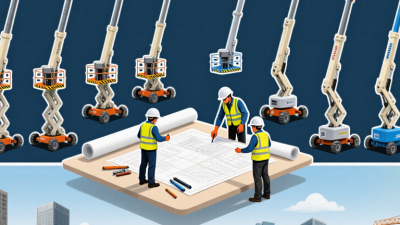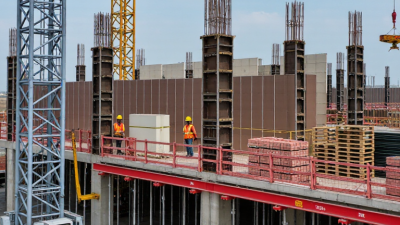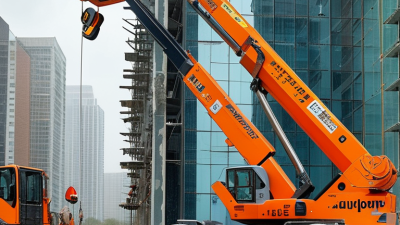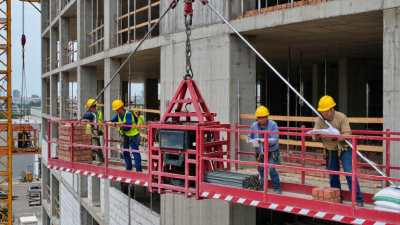
For global buyers, choosing a mast climber manufacturer in China involves more than comparing prices. American Mast Climbers must suit the jobsite, the planned loads, and the conditions crews will face each day. A platform that looks capable in a brochure may feel very different beside a concrete façade, with tools and materials aboard. Details matter.
This introduction examines what buyers should assess when comparing Chinese manufacturers for American projects. Look for clear product specifications, documented testing, practical installation guidance, and responsive after-sales support. Ask how the supplier verifies mast sections, drive systems, safety devices, and platform configurations. Request records you can review, not only polished product images. Requirements can vary by project and location, so buyers should confirm applicable standards with qualified local professionals before ordering. That takes time. It can also prevent costly misunderstandings.
A manufacturer’s experience is useful, but it is not proof that every model fits every site. Compare production capability, customization limits, lead times, spare-parts access, and communication practices. Where possible, request references for similar equipment and applications. No checklist removes all uncertainty; even a careful review can leave questions. Still, a grounded comparison helps global buyers identify suppliers that explain their equipment clearly, acknowledge limitations, and support the product beyond shipment.
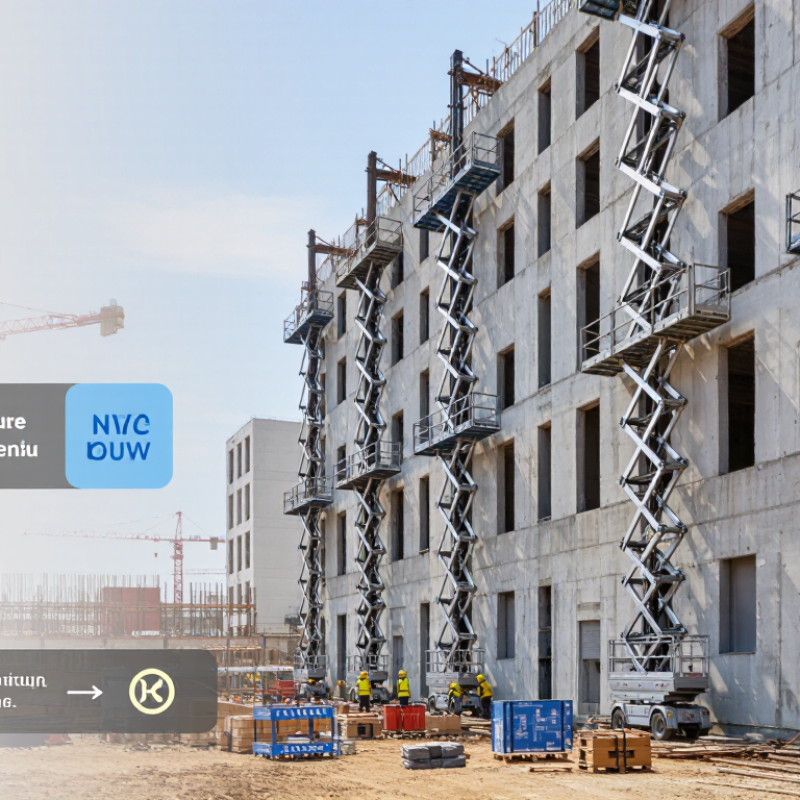
A mast climber is a powered work platform that travels vertically along a steel mast fixed to a building or supported by a ground base. Workers stand on the platform and raise it to the height needed for tasks such as masonry, façade repairs, or window installation. Unlike a suspended platform, it moves on a guided mast using a drive system, commonly with rack-and-pinion components. The mast sections connect as the work rises. Proper anchoring helps control movement and maintain stability.
How does it work? An operator uses platform controls to move the unit up or down. The drive engages with the mast, while brakes and safety devices help limit uncontrolled movement. Before use, crews should check connections, guardrails, access gates, controls, and the surrounding ground. The platform’s rated capacity includes workers, tools, and materials, so a pallet of blocks can change the calculation quickly. Follow the equipment instructions and site-specific inspection procedures. Small oversights matter.
In practice, installation is rarely as tidy as a diagram suggests. Uneven ground, obstacles, or changing façade conditions may require adjustments by qualified personnel. Mast ties must be installed as specified; guessing their spacing is not a safe shortcut. Workers should also keep loads balanced and avoid leaning materials beyond the platform edge. A brief inspection can catch a loose connection. It cannot replace training.
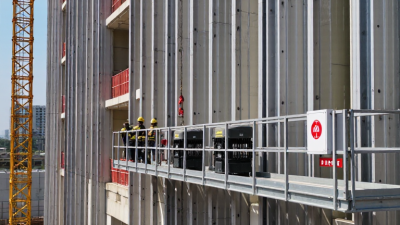
Mast climbers are powered work platforms that travel vertically along a mast attached to a building. Their operating cycle typically follows these five steps; the numbers show process order, not measured performance.
A crew loads the platform, checks the equipment, raises it along the mast using a powered drive, completes work at the required elevation, and lowers the platform when finished. Actual operating procedures depend on the equipment and site requirements.
China’s mast climber industry serves U.S. buyers by supplying equipment for building maintenance, façade installation, and construction work. Projects may require single or twin masts, adjustable platforms, and configurations suited to narrow sidewalks or irregular façades. Details matter. A platform that fits one elevation may not reach another safely or efficiently.
For U.S. projects, buyers often need clear load charts, operating manuals, component lists, and maintenance guidance in English. They should check rated capacity, platform dimensions, power requirements, anchoring instructions, and emergency-lowering procedures before placing an order. Paperwork varies. Some documents explain the equipment well; others leave practical questions unanswered. Ask for clarification rather than treating a sales sheet as an engineering review.
Shipping is only one part of the process. Replacement parts, technical support, commissioning arrangements, and operator training can affect how reliably a machine serves a jobsite. Buyers should also have qualified professionals assess the equipment against project conditions and applicable local requirements. A coastal site, for example, may bring different corrosion concerns than an indoor renovation. No single configuration suits every crew, and imported equipment still needs careful evaluation before use.
Leading Chinese mast climber manufacturers stand out through engineering evidence, not broad claims. Buyers should look for clear load charts, platform dimensions, mast-section drawings, and defined limits for wind and building height. These details help project teams check whether a machine suits a specific façade and work sequence. Details matter.
Experienced manufacturers can explain how the drive system, rack engagement, mast ties, and emergency descent work together. Ask for inspection records and traceable component specifications, then compare them with the machine supplied. A precise answer is more useful than a polished brochure. No factory is flawless. What matters is whether staff can identify a problem, explain its cause, and document the correction. Some answers may take time; that is worth noting.
For global buyers, communication and service planning are also practical markers of quality. Reliable suppliers provide readable manuals, spare-parts lists, remote troubleshooting, and realistic delivery estimates. They should clarify which parts are stocked and which require custom production. Requesting a sample maintenance schedule can reveal whether instructions are usable by site technicians. Buyers should also confirm that proposed equipment and documentation fit the requirements of their destination market. A strong manufacturer welcomes these questions and gives specific, verifiable responses.
| Evaluation Dimension | What Leading Manufacturers Typically Demonstrate | Evidence Global Buyers Can Request | Why It Matters |
|---|---|---|---|
| Standards and regulatory documentation | Design and documentation aligned with the requirements applicable in the destination market. EN 1495 is a relevant European standard for mast climbing work platforms; local regulations may also apply. | Applicable standards list, conformity documentation, risk assessment, operating instructions, and records identifying the tested model and configuration. | Requirements vary by country and product configuration. Buyers should verify that documents cover the exact machine being purchased. |
| Load capacity and platform configuration | Clearly stated rated load, platform dimensions, allowable platform extensions, and permitted load distribution for each configuration. | Model-specific load charts, configuration drawings, and instructions explaining how workers, tools, and materials count toward the rated load. | Capacity depends on the machine setup and load distribution; a single headline capacity may not apply to every platform arrangement. |
| Mast, tie, and structural design | Defined mast sections, connection details, tie-in requirements, and installation limits for the intended building and operating conditions. | Installation drawings, tie-in spacing and force information, foundation or support requirements, and engineering guidance for non-standard applications. | Mast stability relies on the complete installation, including ties and supporting structure—not only on the mast components themselves. |
| Safety systems and operating controls | Safety-related features appropriate to the design, which may include overload protection, upper and lower limits, emergency-stop controls, and emergency-lowering provisions. | Safety-device descriptions, wiring or control diagrams where applicable, inspection instructions, and functional test procedures. | Buyers need to confirm which safeguards are included on the selected model and how they are inspected and maintained. |
| Manufacturing quality and traceability | Documented production checks for critical components, assembly, and finished equipment, with traceability suited to the product and applicable requirements. | Quality-system documentation, inspection records, component identification, and clarification of the scope and validity of any management-system certificate. | A quality-management certificate describes a management system; by itself, it does not certify a particular machine or prove compliance with every product requirement. |
| Materials and environmental protection | Material and coating choices specified for the intended duty and environment, with appropriate protection for exposed steel parts and electrical enclosures. | Material specifications, coating details, maintenance guidance, and any relevant environmental or corrosion-resistance test reports. | Weather, site conditions, storage, and maintenance affect service life; suitability should be checked against the actual operating environment. |
| Electrical compatibility | Electrical configuration and control components specified for the buyer's supply voltage, frequency, and site conditions. | Electrical schematic, motor and control specifications, protection details, and a written confirmation of the ordered electrical configuration. | Electrical requirements differ between markets and job sites; compatibility should be confirmed before production and shipment. |
| Spare parts and service support | Identified service contacts, parts documentation, maintenance instructions, and a practical process for technical support across export markets. | Parts catalogue, recommended maintenance schedule, warranty terms, service response process, and details of local or regional support arrangements. | Parts availability and clear maintenance procedures can reduce avoidable downtime throughout the equipment's working life. |
| Export readiness and documentation | Export packaging and shipment documentation prepared for the agreed destination, with manuals and safety information available in an agreed language. | Packing list, shipping dimensions and weights, manuals, installation documents, and confirmation of the agreed delivery terms and responsibilities. | Clear documentation helps buyers plan transport, customs processing, installation, and operator training. |
Global buyers comparing mast climber suppliers should start with the work, not the catalogue. Measure façade height, platform reach, and typical load, including workers, tools, and cladding panels. Ask for rated-load charts for the exact mast configuration; capacity can change as the platform grows. Details matter. Compare mast section lengths, tie-in spacing, base dimensions, and power requirements against the jobsite layout.
Then examine safety and service evidence. Request operation and maintenance manuals, inspection checklists, and records from comparable installations. Check how emergency lowering works, where overload protection acts, and whether guards and gates are practical with gloves on. Ask who trains operators and how quickly technicians can provide parts. A promise is not a service plan. Confirm lead times for motors, cables, and control components, especially when the project schedule has little float.
Compare quotations line by line. Separate equipment price from freight, commissioning, spare parts, and warranty coverage. Clarify what the quoted configuration includes and whether local support is available after delivery. A short video call can show whether technical staff answer specific questions or repeat sales language. That matters. Still, no spreadsheet captures every site condition; wind, uneven ground, and changing façade details can alter the practical choice. Record assumptions, request drawings, and compare supplier responses using the same project data.
For buyers comparing American mast climbers from Chinese manufacturers, compliance checks should begin with the exact machine configuration. Request certificates, test reports, and operating manuals that match the model and components being quoted. Check that documents are current and issued by a competent, independent body where appropriate. Requirements vary by destination market, so a generic certificate may not cover your installation.
Ask for rated-load charts, platform dimensions, anchorage guidance, and inspection records. Have a qualified engineer review them against the site plan, especially where façades, tie spacing, or ground conditions are unusual. A video call from the factory can help confirm serial plates and assembly details, but it is not a substitute for an independent inspection. Easy to miss.
After-sales support deserves the same scrutiny. Get written response times, warranty coverage, spare-parts lead times, and procedures for troubleshooting faults. Ask which parts are stocked locally and which ship from China; a small control component can delay a job. Request technician training, illustrated maintenance instructions, and sample service records. Then test the process with a specific question before purchase. Slow replies are a warning, though one delayed email alone proves little. Buyers often focus on delivery price and underestimate support after installation. That deserves a second look.