
Why Choose American Mast Climbers?
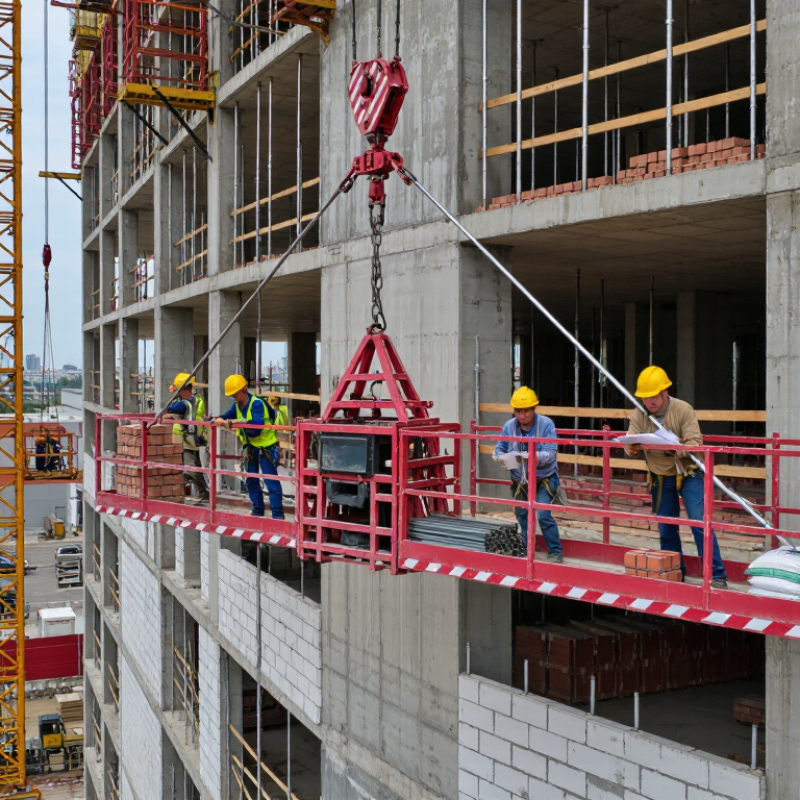
Choosing American Mast Climbers can give contractors a practical approach to elevated construction work. Mast climbing work platforms support crews, tools, and materials at changing heights. They can improve access around façades, masonry walls, restoration sites, and complex building envelopes. The right system may also reduce repeated ladder movement and help crews maintain a steadier workflow.
Experience matters here. American Mast Climbers focuses on equipment designed for demanding jobsite conditions, where limited ground space and changing elevations create daily challenges. A capable provider should understand platform configuration, loading requirements, anchoring needs, inspection routines, and operator training. These details affect more than productivity. They influence worker confidence and site control.
Small details matter.
A reliable project partner should explain capacity limits clearly. It should also help teams select suitable layouts, accessories, and installation procedures. Good technical support does not end when equipment arrives. Field questions can appear during setup, relocation, or weather changes. Clear answers are valuable then.
No supplier is perfect. Project conditions can expose planning gaps, and even experienced teams must review assumptions. That is why customers should confirm site dimensions, structure conditions, local requirements, and maintenance expectations before work begins. American Mast Climbers may be a strong choice for organizations seeking specialized access equipment and practical support. The best decision still depends on documented needs, trained personnel, and careful evaluation. Reliability is built through preparation, not promises.
American Mast Climbers and ANSI A92.9-2020 Compliance Standards
Why Choose American Mast Climbers?
American mast climbers are selected for controlled access, stable working positions, and efficient façade operations. Their value depends on more than lifting capacity. ANSI/SAIA A92.9-2020 establishes safety requirements for mast-climbing work platforms, including design, installation, inspection, operation, maintenance, and training. It is a voluntary consensus standard, not a replacement for applicable regulations.
The standard emphasizes site-specific planning and competent supervision. Crews should verify foundation conditions, tie locations, platform loading, emergency controls, and weather limits before use. Small details matter. A missing inspection record can weaken an otherwise sound safety program. OSHA’s construction guidance also stresses proper training, equipment inspection, and fall protection. These controls become especially important because the U.S. Bureau of Labor Statistics recorded 1,069 fatal occupational injuries in construction during 2022 (BLS, Census of Fatal Occupational Injuries, 2022).
In practice, compliance must remain visible at the workface. Operators need clear instructions, documented pre-use checks, and prompt reporting of unusual vibration, damaged components, or uneven movement. Managers should review records, not merely collect them. That distinction is often overlooked. The ANSI/SAIA A92.9-2020 framework supports a disciplined process, but it cannot correct poor supervision or rushed installation. Selecting equipment from experienced mast-climbing professionals can help, provided their competence is verified through training records, inspection procedures, and demonstrated field experience. Safety is practical work. It is never automatic.
Why Choose American Mast Climbers? - American Mast Climbers and ANSI A92.9-2020 Compliance Standards
| Evaluation Dimension | ANSI A92.9-2020 Compliance Focus | Relevant Platform or Project Data | Practical Value for Contractors | Recommended Verification Record |
|---|---|---|---|---|
| Equipment Classification | Mast-climbing work platforms are covered as elevating work platforms designed to provide personnel and materials with access to elevated work areas. | Platform configuration, mast arrangement, rated capacity, travel direction, and intended application should be clearly identified. | Supports correct equipment selection and reduces the risk of using a platform outside its designed purpose. | Manufacturer technical data, configuration drawings, and project equipment schedule. |
| Design and Engineering | The standard addresses design-related safety considerations, including structural integrity, stability, controls, guarding, and protective devices. | Design review should account for platform loads, mast reactions, tie requirements, foundation conditions, wind exposure, and site geometry. | Helps create a safer installation plan before equipment reaches the jobsite. | Stamped engineering documents where required, site calculations, and approved installation drawings. |
| Rated Capacity | Loads must remain within the equipment's marked and documented rated capacity. | Account for workers, tools, materials, accessories, uneven loading, and any configuration-specific limits. | Improves load control and helps prevent overloading during façade, masonry, glazing, and maintenance work. | Capacity plate, operating manual, daily load-planning checklist, and inspection records. |
| Installation and Dismantling | Installation, alteration, relocation, and dismantling must follow documented procedures and applicable site controls. | Verify base preparation, mast sections, tie-ins, platform components, guardrails, gates, and electrical connections. | Creates a repeatable process for safe assembly and reduces installation-related errors. | Installation checklist, competent-person sign-off, tie-in plan, and completion inspection. |
| Mast Ties and Stability | Support and restraint arrangements must be suitable for the structure, equipment configuration, and anticipated environmental conditions. | Tie spacing and anchorage details are project-specific and should be determined from engineering information and manufacturer instructions. | Helps maintain platform stability while work progresses vertically along the building elevation. | Engineered tie layout, anchorage details, torque or installation records, and field verification. |
| Fall Protection | Work platforms require appropriate guardrails, access gates, toe protection, and other protective measures applicable to the configuration. | Inspect working decks, platform extensions, gates, guardrail systems, and access points before use. | Reduces exposure to falls from platforms, access areas, and open working edges. | Pre-use inspection form, corrective-action log, and site fall-protection plan. |
| Controls and Emergency Functions | Operating controls, protective devices, emergency functions, and interlocks should be maintained and tested according to applicable procedures. | Check control stations, emergency stop functions, limit devices, alarms, leveling functions, and communication systems where provided. | Improves operator control and supports a prompt response to abnormal conditions. | Functional test record, maintenance log, and operator inspection checklist. |
| Inspections | The standard includes inspection and maintenance provisions intended to identify defects before continued operation. | Inspection frequency should reflect the equipment instructions, site conditions, use intensity, modification history, and applicable regulations. | Provides documented evidence that safety-critical components are being monitored. | Daily inspections, periodic inspection reports, maintenance records, and defect close-out documentation. |
| Training and Authorization | Personnel involved in operation, inspection, maintenance, installation, and supervision should receive training appropriate to their responsibilities. | Training should cover controls, capacity limits, access, emergency procedures, pre-use checks, hazards, and site-specific rules. | Promotes consistent operating practices and limits unauthorized equipment use. | Training certificates, practical evaluation records, authorization lists, and refresher-training logs. |
| Weather and Environmental Conditions | Operation must consider environmental conditions and the limits stated in the equipment documentation and project plan. | Review wind, lightning, temperature, ice, snow, rain, visibility, nearby power lines, and falling-object hazards. | Supports timely suspension of work when conditions could affect stability or safe operation. | Weather monitoring record, stop-work criteria, and site supervisor approval. |
| Electrical Safety | Electrical systems and connections must be installed, inspected, and maintained in accordance with applicable requirements. | Check power supply, grounding, cable routing, connectors, protection from damage, and compatibility with site electrical conditions. | Reduces the likelihood of electrical faults, equipment damage, and unsafe contact hazards. | Electrical inspection report, grounding verification, maintenance log, and authorized electrician documentation. |
| Documentation and Traceability | Safe use depends on access to current operating, installation, inspection, maintenance, and training information. | Maintain equipment identification, manuals, configuration records, inspection history, modifications, repairs, and incident reports. | Improves accountability and makes compliance reviews more efficient. | Jobsite compliance file, equipment register, revision-controlled manuals, and audit checklist. |
| Project Adaptability | Compliance is applied to the actual equipment configuration and operating environment rather than to a generic platform setup. | Review building height, façade setbacks, work zones, material handling needs, access requirements, and local regulations. | Helps align the platform arrangement with the project's schedule, productivity goals, and site constraints. | Project-specific method statement, layout plan, risk assessment, and approval workflow. |
| Compliance Status | ANSI A92.9-2020 provides a recognized framework for the safe design, installation, operation, inspection, maintenance, and training of mast-climbing work platforms. | Actual compliance should be confirmed for the specific model, configuration, installation, jurisdiction, and worksite conditions. | Encourages a documented, lifecycle-based approach to equipment safety rather than relying only on initial selection. | Complete compliance dossier reviewed by qualified personnel and aligned with applicable local requirements. |
Related Posts
-
Top 10 Hek Mast Climber Suppliers Worldwide?
-
What Is an Apollo Mast Climber and How Does It Work?
-
Exploring Innovative Alternatives to Best Mast Climbing Work Platforms Mewps
-
5 Best Reasons to Choose Mast Climbing Work Platforms Mewps for Your Next Project
-
How to Maximize Efficiency in Construction Using the Top Climber Mast Climbing System
-
What is a Mast Climbing System and How Does It Enhance Construction Efficiency