
10 Mobile Elevated Platform Buying Tips for Global Buyers
Buying a Mobile Elevated Platform for an overseas project is not just a price comparison. The right machine must fit the work, the site, and the route from delivery to daily operation. A platform that reaches the required height may still be unsuitable if its working load is too low or its base cannot pass through a narrow doorway.
Start with the actual task. Will workers change lights in a warehouse, handle maintenance in a factory, or work outdoors on uneven ground? Each setting raises different questions about platform height, capacity, power source, tires, and maneuverability. Small details matter. Measure doorways, aisle widths, floor conditions, and transport access before requesting a quotation. A specification sheet helps, but it cannot replace a clear picture of the job site.
For global buyers, the purchase also involves practical checks beyond machine performance. Confirm what documentation, operator guidance, spare parts, warranty support, and delivery arrangements the supplier can provide. Ask how service requests are handled across time zones. Compare quotations using the same specifications, rather than relying on the lowest headline price. That sounds simple. It is easy to overlook.
The following ten buying tips offer a structured way to evaluate options, ask sharper questions, and reduce avoidable surprises. They are not a substitute for site-specific assessment, and no checklist can predict every problem. Still, a careful review before ordering is usually less costly than discovering a mismatch after delivery.
Understanding Mobile Elevated Platforms and Their Main Types
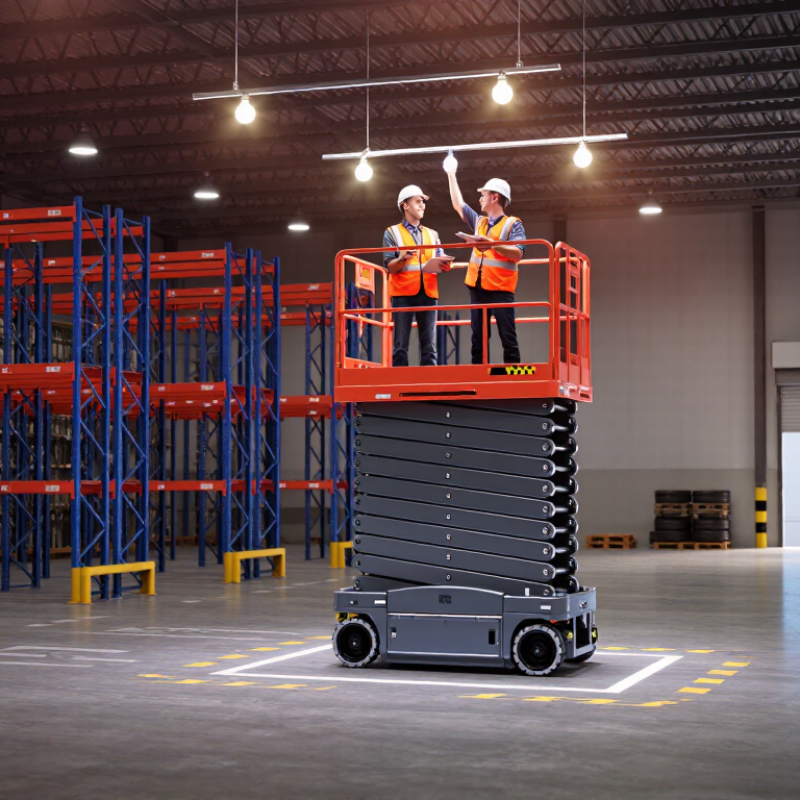
A mobile elevated platform is a powered or manually positioned work surface that raises people and tools above floor level. It can help with tasks such as changing warehouse lighting, inspecting ceilings, or maintaining building façades. The right type depends on where the machine must travel and how workers need to reach the task.
Scissor lifts rise vertically on crossed metal supports. Their broad decks suit work directly overhead, such as fitting lights in a clear indoor aisle. Boom lifts use an extending arm to reach over obstacles or across gaps. Some move only vertically; others articulate around structures. Vertical mast lifts are compact for narrow indoor spaces, while push-around platforms need manual positioning and a suitable floor. Not quite the same job.
Before comparing equipment, measure doorway width, platform height, and the distance from the machine’s base to the work area. Check the rated capacity against the combined weight of workers, tools, and materials. Also consider floor slope, surface condition, power source, and whether the route includes ramps or tight turns. A catalog specification cannot reveal every site constraint. A small turning circle may matter more than extra height in a crowded storeroom. Buyers should verify operating limits in the manufacturer’s instructions and arrange practical operator training. Even experienced teams can overlook a cable tray or low beam during a quick site survey.
| No. | Buying Tip | What to Compare | Practical Checks for Buyers |
|---|---|---|---|
| 1 | Choose the right platform type | Common MEWP types include slab scissor lifts, rough-terrain scissor lifts, vertical mast lifts, articulated boom lifts, and telescopic boom lifts. Scissor and mast lifts generally provide vertical access; boom lifts can reach over or around obstacles. | Compare the machine’s intended surface and movement pattern. Typical working-height ranges vary widely by model: compact mast lifts may be around 5–12 m, many scissor lifts around 6–18 m, and boom lifts around 12–40 m or more. Check the individual machine specification; these are indicative ranges, not guarantees. |
| 2 | Verify height and outreach | Distinguish platform height from working height. Working height is commonly quoted as approximately 2 m above platform height, but conventions can differ. Boom lifts also have horizontal outreach and a working envelope. | Measure the work point, overhead clearance, and distance from the machine’s possible parking position. For boom models, review the manufacturer’s load chart or working-envelope diagram rather than relying on maximum height alone. |
| 3 | Check platform capacity | Rated capacity includes occupants, tools, and materials. Many compact lifts are rated for one or two occupants, while larger platforms may allow more, subject to the model’s rating and operating conditions. | Add the weight of workers, tools, and materials before selecting a unit. Confirm both the total capacity and any restrictions on capacity at height, platform extension, or outdoor wind exposure. |
| 4 | Match the machine to the terrain | Electric slab models are commonly designed for firm, level indoor floors. Rough-terrain models may have larger tires, greater ground clearance, and features such as four-wheel drive or outriggers, depending on the design. | Assess slope, surface condition, floor loading, drainage, and ground clearance. Never assume that a rough-terrain machine can operate on every slope or that an indoor machine is suitable for uneven ground. |
| 5 | Measure access and storage space | Overall width, length, stowed height, turning radius, and platform dimensions affect access through doors, aisles, and work areas. | Measure the narrowest doorway, route, lift, and storage location. Compare these measurements with the machine in its stowed configuration, including any protruding rails, tires, or attachments. |
| 6 | Select a suitable power source | Battery-electric models are often chosen for indoor work because they have no exhaust emissions at the point of use. Combustion-powered models are commonly used outdoors; some machines use hybrid or other power configurations. | Compare required operating hours, charging access, battery replacement availability, noise limits, ventilation, and local emissions rules. Confirm that the power system suits the worksite and planned duty cycle. |
| 7 | Evaluate productivity features | Features such as drive-at-height capability, platform extension decks, proportional controls, non-marking tires, and fast charging can affect task efficiency. Availability varies by machine type and model. | Prioritize features that directly support the job. Check whether the machine can travel while elevated under the specified conditions, and whether extensions or accessories affect capacity or operating limits. |
| 8 | Review safety and compliance | Relevant requirements depend on the country, machine category, and jobsite. Buyers commonly need to check applicable MEWP standards, guarding, emergency lowering, alarms, load limits, and operator training requirements. | Confirm conformity documentation and locally required inspections before purchase. Plan for pre-use checks, rescue procedures, fall-protection requirements, and training by qualified personnel in accordance with local rules and the manufacturer’s instructions. |
| 9 | Plan transport and maintenance | Transport requirements depend on machine weight and dimensions. Service access, parts availability, inspection intervals, battery support, and technician coverage can influence downtime. | Check shipping and loading dimensions, transport vehicle requirements, local service capacity, parts lead times, warranty coverage, and the maintenance schedule. Request operating and maintenance documentation in a language the team can use. |
| 10 | Compare total cost of ownership | Purchase price is only one cost. Consider delivery, duties and taxes, training, inspections, energy or fuel, maintenance, replacement parts, downtime, and resale value. | Compare purchase and rental options against expected annual use. Ask for a clear specification and itemized quotation, and confirm that the machine’s configuration, documentation, and support meet destination-market requirements. |
Note: Height, capacity, and configuration figures vary by machine and market. Confirm exact ratings, operating limits, and compliance requirements in the selected machine’s documentation and applicable local regulations.
Related Posts
-
Essential Tips for Safe Use of Elevated Work Platforms in Construction
-
Best Mobile Aerial Work Platform for Your Business Needs?
-

Exploring Unique Alternatives to Mobile Elevated Platforms for Enhanced Productivity
-

What is Mobile Aerial Platform and How to Choose the Right One?
-
Top Easy Climb Mast Climber Features You Need to Know?
-

How to Choose the Right Mobile Elevated Platform for Your Business Needs