What is Mobile Aerial Platform and How to Choose the Right One?
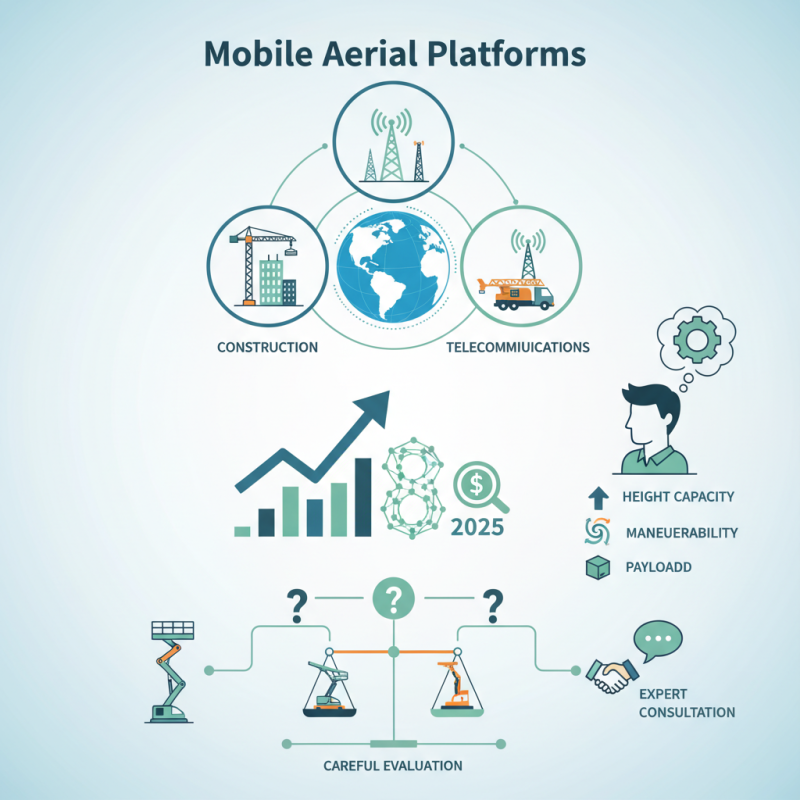
Mobile Aerial Platforms (MAPs) have become crucial tools across various industries. Reports indicate that the MAP market is projected to grow significantly, reaching $8 billion by 2025. These platforms enhance operational efficiency and safety in sectors like construction, telecommunications, and emergency services.
Dr. John Smith, a leading expert in unmanned aerial systems, emphasizes the importance of choosing the right MAP. He states, "Selecting the appropriate Mobile Aerial Platform can transform project execution and safety standards." This highlights the depth of consideration needed.
Choosing a MAP involves factors like height capacity, maneuverability, and payload. Understanding specific requirements is not always straightforward. While many platforms offer advanced features, not all suit every application. Users often face challenges in aligning their needs with available options, which calls for careful evaluation and expert consultation.
Definition and Key Features of Mobile Aerial Platforms
Mobile aerial platforms (MAPs) are versatile tools used across many industries. They provide operators with the ability to work at heights safely and efficiently. These platforms can lift equipment or personnel for various tasks, from construction to maintenance. The design of MAPs ensures stability and safety, making them crucial in hazardous environments.
When selecting a mobile aerial platform, several features are essential. Consider the maximum height and load capacity. A platform that does not reach your required height is ineffective. Stability is another critical aspect. Look for models with wider bases or outriggers that enhance safety during operations. Maneuverability is also vital; platforms with small turning radii can navigate tight spaces effectively.
Reflecting on user experiences reveals some common challenges. Some platforms may lack adequate training resources. Proper education on handling these machines is essential for safety. Operators often need to understand the specific terrain they will encounter. Understanding the environment plays a crucial role in ensuring successful operations.
Types of Mobile Aerial Platforms: Drones, Aerial Lift, and More
Mobile aerial platforms have revolutionized various industries by providing efficient solutions for tasks at heights. The main types include
drones and aerial lifts.
Drones are versatile and often used for surveying, photography, and monitoring. They offer unique benefits, such as remote access to hard-to-reach places and real-time data collection.
Their agility and varying payload capacities make them suitable for many applications.
Aerial lifts, on the other hand, are ideal for direct access at specific heights.
They come in many forms, such as boom lifts and scissor lifts. These platforms allow workers to operate safely at considerable heights. Importantly, the choice between these platforms depends on the specific requirements of a project.
Assessing the terrain, the reach needed, and the intended use is crucial.
When considering a mobile aerial platform, you must weigh the advantages and limitations.
Drones can struggle in poor weather conditions.
Aerial lifts might require more extensive setup time. Balancing accessibility, safety, and cost are vital factors in making the right decision.
Thus, thorough research and planning are essential to meet project goals successfully.
Applications of Mobile Aerial Platforms in Various Industries
Mobile aerial platforms have revolutionized various industries, providing unique solutions for various applications. In agriculture, these platforms are employed for crop monitoring and surveying. They capture high-resolution images to analyze crop health. As a result, farmers can make informed decisions based on real-time data. In construction, aerial platforms enhance site inspections and progress tracking. They offer a bird's-eye view, ensuring accuracy and efficiency.
In emergency services, mobile aerial platforms play a crucial role in disaster management. First responders can assess damage and locate victims more effectively. These platforms also support search and rescue operations. Their ability to navigate hard-to-reach areas proves invaluable. However, challenges exist. Not all platforms are suitable for every task. Some may lack the required payload capacity or imaging technology. Careful evaluation is necessary to ensure the right choice.
The entertainment industry benefits from aerial platforms as well. They capture stunning aerial footage for films and events. Yet, there are regulations that must be adhered to concerning flight paths and safety. Balancing creativity with compliance can be tricky. It’s important to stay informed about the latest guidelines. Tailoring the use of mobile aerial platforms to meet specific needs is key. Proper understanding can lead to innovative outcomes across all sectors.
Factors to Consider When Choosing a Mobile Aerial Platform
When selecting a mobile aerial platform, several key factors deserve attention. The platform's height is crucial; it dictates how effectively you can reach elevated work sites. A platform that is too low might hinder your projects. Similarly, assess the platform's weight capacity. Choose one that safely supports your equipment and personnel.
Maneuverability is another important aspect. A compact, easily transportable platform saves time and reduces effort. Look for features such as adjustable legs or tracks for stability on uneven terrain. The ease of operation matters, too. A user-friendly control system can enhance efficiency and safety.
Consider the application of the platform. Will it be used in construction, maintenance, or film production? Each use case may require specific features, such as enhanced reach or unique attachments. Always reflect on your needs and how they align with the platform’s capabilities. Finding the right fit can prevent costly mistakes in the future.
Comparison of Mobile Aerial Platform Types
This chart compares the load capacities of various types of mobile aerial platforms, providing insight into their capabilities for different applications. Understanding these differences can help in making informed decisions when selecting the right platform for specific tasks.