2026 Top Trends: The Rise of Mast Scaffolds in Construction Industry
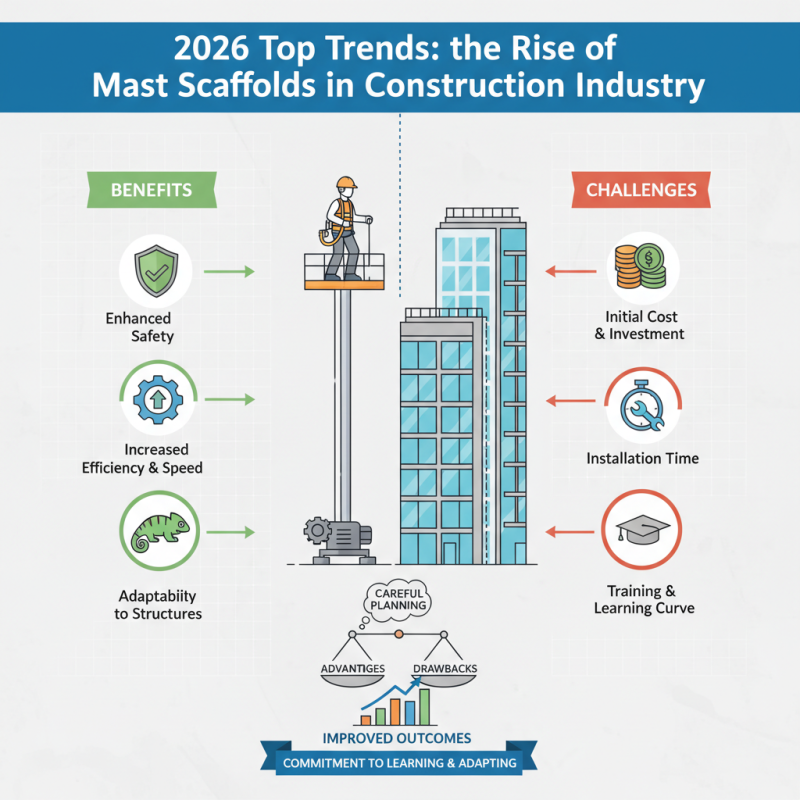
In recent years, the construction industry has seen significant advancements, particularly with the introduction of new technologies. One of the most noteworthy innovations is the Mast Scaffold. This system offers enhanced safety and efficiency, making it a popular choice for many projects.
Mast Scaffolds provide a sturdy platform that can reach great heights quickly. Builders appreciate their ability to adapt to various structures and environments. However, not all construction teams are familiar with this solution. Training is essential for proper usage to ensure worker safety.
Despite their benefits, Mast Scaffolds come with challenges. Some contractors struggle with initial costs and installation times. These hurdles require careful planning and consideration. It is essential for teams to weigh the advantages against the drawbacks to determine the best approach for their projects. Embracing this innovation may lead to improved outcomes, but it requires a commitment to learning and adapting.
Emergence and Definition of Mast Scaffolds in Construction
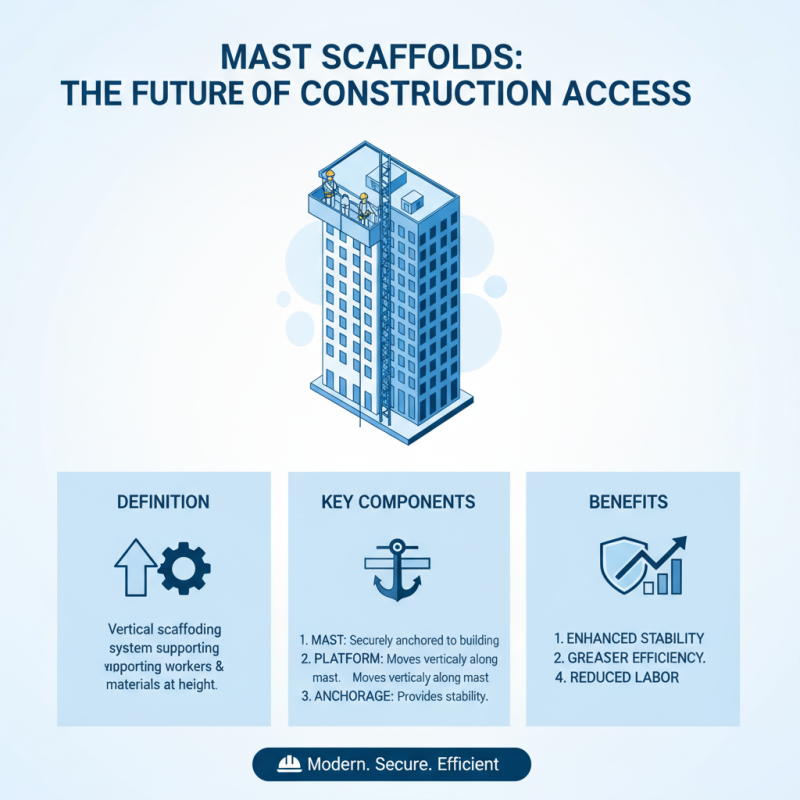
Mast scaffolds are gaining popularity in the construction industry. They are defined as vertical scaffolding systems that provide support for workers and materials at height. These structures consist of a mast, which is securely anchored to the building or structure. This design allows for greater stability and safety compared to traditional scaffolding types.
One key feature of mast scaffolds is their flexibility. They can be adjusted easily to reach varying heights. This adaptability streamlines construction processes, making it more efficient. Workers appreciate the ease of access to different levels. However, there are still challenges in implementing these systems. Training is essential to ensure safety and proper use. Lack of experience can lead to accidents.
Another important aspect is the materials used for mast scaffolds. They are often made of lightweight metals, reducing transportation costs. Yet, durability is a concern. Over time, exposure to the elements may weaken these structures. Regular inspections are crucial to maintain safety standards. The rise of mast scaffolds brings both opportunities and challenges for the construction industry.
Historical Context of Scaffolding Types and Innovations
Scaffolding has transformed over the centuries. Originally, it consisted of wooden planks and simple supports. Workers relied heavily on these primitive structures during ancient construction projects. Observing these developments offers insights into current technologies.
The advent of metal scaffolding in the late 19th century marked a significant innovation. Steel frames provided more stability than wood. This shift allowed builders to tackle taller structures with greater safety. However, this increase in height often led to new challenges, such as wind resistance and structural integrity.
Reflections on past failures remind us that innovation must be carefully evaluated.
Today, mast scaffolds are rising in popularity. Their design allows for quicker assembly and disassembly. Yet, users must remain vigilant about safety standards. Overconfidence can lead to mistakes, especially at heights. As we adapt to new trends, it’s crucial to learn from historical practices. The evolution of scaffolding illustrates a blend of progress and caution in the construction industry.
Advantages of Mast Scaffolds Over Traditional Scaffolding Systems
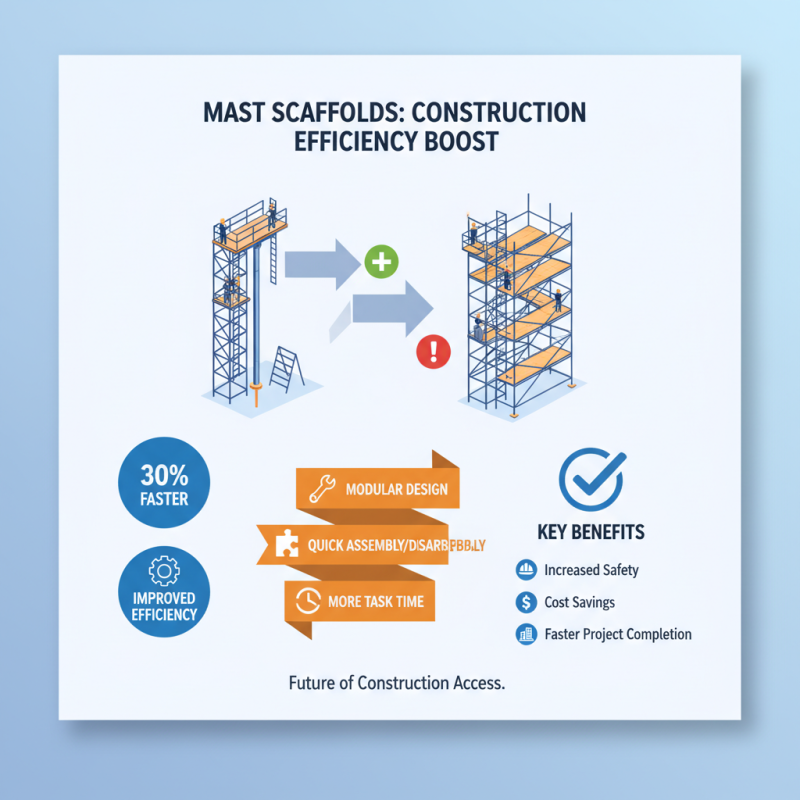
Mast scaffolds are gaining traction in the construction industry. Reports suggest that they improve efficiency by 30% compared to traditional scaffolding. This is largely due to their modular design, allowing for quicker assembly and disassembly. Workers can spend more time on tasks rather than setting up equipment.
One significant advantage is their height capability. Mast scaffolds can reach up to 300 feet when properly engineered, offering greater flexibility for high-rise projects. Traditional scaffolding often struggles with stability at such heights, which can lead to safety concerns. Additionally, mast scaffolds typically occupy less ground space, making them suitable for congested job sites.
However, reliance on technology does pose challenges. Detailed training is essential for workers to operate mast scaffolds safely. Some workers may hesitate to embrace this new system due to a lack of familiarity. This could result in slow adoption rates. Proper assessments and training programs must be established to address these issues and maximize the benefits of mast scaffolds in the industry.
Impact of Mast Scaffolds on Safety and Efficiency in Construction Projects
Mast scaffolds are transforming the construction industry. They provide a stable working platform at great heights. Safety is a top concern. These scaffolds minimize fall risks, which are common in construction. Workers can access higher levels without excessive strain. This efficiency leads to quicker project completion times.
Tips: Always ensure proper training on scaffold use. Regular inspections and maintenance are crucial. A well-maintained scaffold can prevent accidents.
However, the adoption of mast scaffolds is not flawless. Some workers may feel uneasy with new systems. Change can create hesitation. It’s vital to address these feelings openly. Communication helps ease the transition. Encourage teamwork to build confidence in using new equipment.
Incorporating mast scaffolds requires planning. Each project is unique; assess specific site conditions before installation. Continual learning is key to maximizing safety and efficiency. Workers should share experiences to improve processes. Mistakes are part of growth. Embrace them to enhance future efforts.
Future Outlook: The Role of Mast Scaffolds in Sustainable Construction Practices
Mast scaffolds are gaining traction in the construction industry. These structures offer height flexibility, safety, and efficiency. Their design allows for quick assembly and disassembly, which can reduce labor costs. Workers can access hard-to-reach areas easily. This productivity increase can shorten project timelines.
Sustainable construction is becoming crucial as global demands rise. Mast scaffolds contribute to this by minimizing material waste. They often require fewer resources than traditional scaffolding. This reduction supports eco-friendly practices and lowers the carbon footprint of construction sites. However, the use of these scaffolds isn't without challenges.
Construction teams must ensure proper training for workers. Misuse can lead to accidents and inefficiencies. Regular inspections are essential to maintain safety standards. As mast scaffolds continue to evolve, there is potential for smarter, more sustainable designs. The future will demand adaptability and innovation in this space.
2026 Top Trends: The Rise of Mast Scaffolds in Construction Industry
| Trend |
Description |
Impact on Sustainability |
Projected Growth (%) |
| Increased Efficiency |
Mast scaffolds allow for quicker assembly and disassembly, reducing labor time. |
Lower energy consumption reduces carbon footprint. |
30% |
| Material Innovations |
Usage of sustainable materials in the production of mast scaffolds for better environmental impact. |
Promotes recycling and reduces waste. |
25% |
| Safety Improvements |
Enhanced safety features on mast scaffolds reduce accidents and injuries on site. |
Less accidents lead to lower resource wastage and labor costs. |
20% |
| Technology Integration |
Incorporating IoT and AI for monitoring and managing scaffolding efficiency and usage. |
Optimizes resource allocation and minimizes waste. |
35% |
| Adaptability |
Mast scaffolds can be easily adjusted for various construction types and heights. |
Reduces need for multiple scaffold types, saving materials. |
28% |