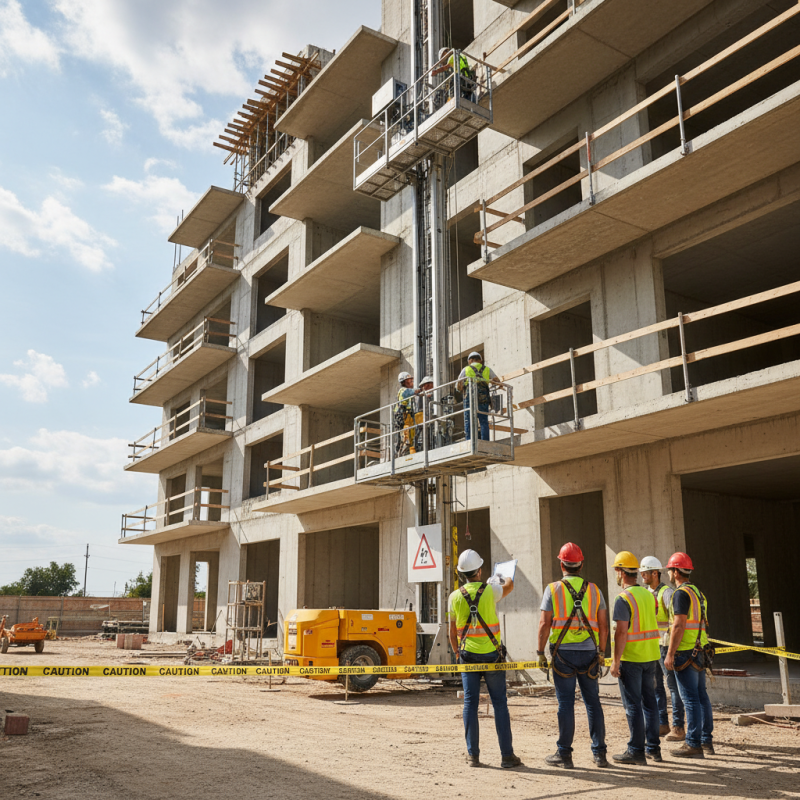
Why Mast Climber Safety Is Essential for Construction Sites
Mast Climber Safety is often overlooked on construction sites. Workers may underestimate the risks. This negligence can lead to severe accidents and injuries.
When using mast climbers, safety precautions are paramount. These machines provide height access for various tasks. However, improper use poses significant dangers. Regular inspections and safety training are critical. It’s important to ensure that all staff understand the protocols.
Moreover, even with the best safety measures, human error could occur. Operators can become complacent or distracted. Awareness and continuous education are crucial to maintain a safe environment. Construction companies must prioritize Mast Climber Safety to protect their workforce. Safety should never be an afterthought; it must be ingrained in the company culture.
Importance of Safety Protocols for Mast Climbers in Construction
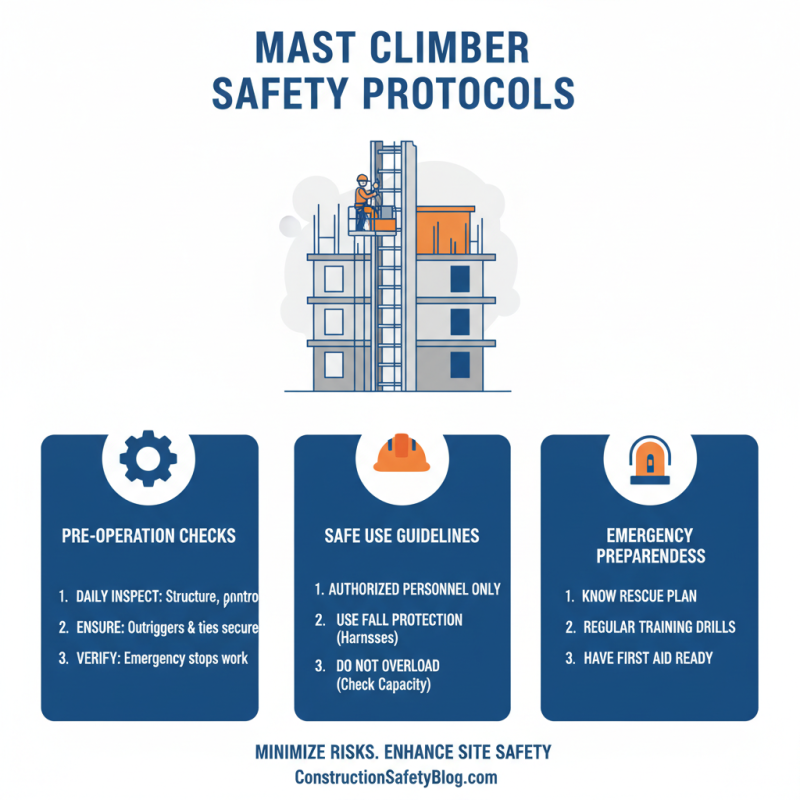
Mast climbers are essential tools in construction. However, their usage comes with risks. Safety protocols are crucial to protect workers. Following these guidelines minimizes accidents and enhances safety on site.
One major tip is to always inspect equipment before use. Check for wear and tear. Make sure to secure all safety gear. Operators must be trained adequately. They should know how to respond to emergencies quickly. These measures help build a culture of safety.
Another important point is maintaining clear communication. Workers should use hand signals or radios. This ensures everyone is on the same page. Miscommunication can lead to dangerous situations. Encourage a habit of reporting hazards immediately. Ignoring small issues can lead to bigger problems later.
Common Hazards Associated with Mast Climbers on Construction Sites
Mast climbers are increasingly popular for construction sites. They provide easy access to high areas. However, they also introduce various hazards that workers need to be aware of. Falling from heights is a primary concern. Workers can slip or lose balance, especially on windy days. Proper training and safety measures are essential to minimize these risks.
Another common hazard is equipment malfunction. Mechanical failures can lead to serious accidents. Regular maintenance checks are crucial. Workers may overlook this, thinking it's unnecessary. Ignoring these checks is a mistake that can have dire consequences. Also, overcrowding on mast climbers is a problem. Too many workers can destabilize the platform. It's crucial to enforce a strict limit on personnel.
Additionally, poor weather can worsen conditions. Rain can make surfaces slippery. Snow and ice can increase the risk of falls. Workers should be cautious during adverse weather. They should not rush while working in challenging conditions. Recognizing these hazards is the first step towards safety. It requires ongoing training and awareness on every construction site.
Training Requirements for Operators of Mast Climbers
Mast climbers are popular for high-rise construction. However, safety training for operators is critical. According to the National Safety Council, falls are a leading cause of construction fatalities. In fact, 38% of construction-related deaths are due to falls. Proper training can significantly reduce these risks.
Operators must understand the equipment and its limitations. Training requirements often include proper harness use and equipment inspections. A report from the Occupational Safety and Health Administration states that well-trained workers are 40% less likely to suffer an accident. This highlights the value of investing in effective training programs.
Not all operators receive adequate instruction. Some may skip crucial safety protocols. This oversight can lead to dangerous situations. Propper training should include real-life scenarios to improve decision-making under pressure. Operators must be well-versed in emergency procedures as well. Considering the statistics, continuous training is essential for maintaining a safe work environment.
Mast Climber Safety Training Requirements
Case Studies: Consequences of Neglecting Mast Climber Safety
In recent years, several construction sites have faced severe consequences due to neglected mast climber safety. One case involved a site where critical safety protocols were skipped. Workers felt pressure to meet tight deadlines. Outdated equipment was used, putting everyone at risk. The result? An avoidable accident that left multiple workers injured.
Another incident occurred when maintenance of mast climbers was overlooked. Lack of inspections led to equipment failure during operation. A worker fell as the climber malfunctioned. The aftermath was chaos—urgent medical attention was needed, and the project faced delays.
These examples highlight a stark reality. Safety should never be compromised for speed. Investing in regular training and thorough inspections is crucial. The consequences of neglect are often disastrous and can impact the lives of many. Reflecting on these incidents can encourage a strong safety culture in construction. Everyone should prioritize safe practices.
Why Mast Climber Safety Is Essential for Construction Sites - Case Studies: Consequences of Neglecting Mast Climber Safety
| Incident Date |
Location |
Number of Injuries |
Fatalities |
Estimated Cost ($) |
Safety Violation |
| 2022-01-15 |
City A |
3 |
1 |
250,000 |
Improper Setup |
| 2022-04-20 |
City B |
2 |
0 |
100,000 |
User Error |
| 2022-09-12 |
City C |
1 |
0 |
75,000 |
Lack of Maintenance |
| 2023-02-03 |
City D |
4 |
2 |
500,000 |
Non-compliance with Standards |