Choosing a China-based Mast Scaffold manufacturer requires more than comparing prices, photos, or export promises. It requires evidence. The U.S. Bureau of Labor Statistics recorded 1,075 fatal work injuries in construction during 2023. Falls remain a major concern. OSHA’s Scaffold Safety guidance also highlights structural failure, falling objects, and unsafe access as recurring hazards.
The wider powered-access sector shows similar pressure. IPAF’s 2024 Global Safety Report recorded thousands of reported incidents involving mobile elevating work platforms and related equipment. Mast-climbing platforms are not identical to those machines. However, the message is relevant: equipment design, inspection, training, and maintenance must work together. Peter Douglas, former CEO of IPAF, has stated, “Safety is not a competitive advantage; it is a precondition for the industry to operate.” That principle should guide every supplier conversation.
A reliable Chinese manufacturer should provide traceable load calculations, platform dimensions, mast-section specifications, emergency-stop details, and tested anchoring methods. Ask for factory inspection records, welding procedures, component traceability, and certificates matching the destination market. EN 1495, where applicable, and relevant regional standards can help frame technical discussions. Yet certificates alone are not enough. Visit the production line when possible. Examine gearbox noise, bolt finishing, paint thickness, and packaging protection. Small details reveal manufacturing discipline.
Some buyers focus too heavily on unit cost. That is understandable, but incomplete. A cheaper Mast Scaffold can become expensive through downtime, replacement parts, or weak technical support. This guide examines how to compare Chinese manufacturers carefully, where documentation may be unclear, and which practical questions deserve stronger answers before purchase.
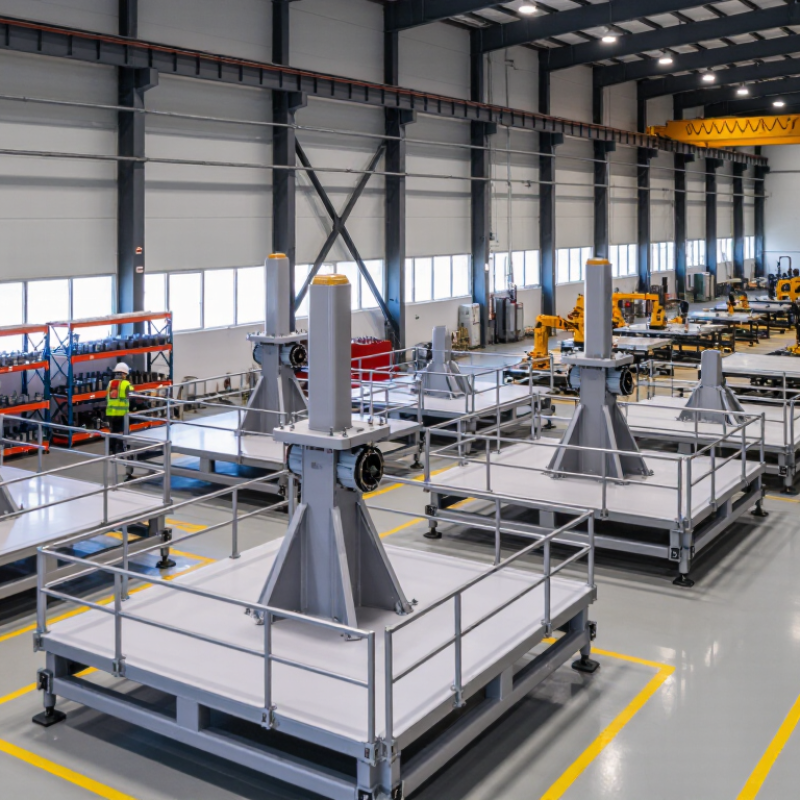
A mast scaffold, often called a mast climbing work platform, is a powered platform fixed to a vertical mast. Rack-and-pinion drives raise workers and materials along building façades. It provides a stable, adjustable deck instead of repeated ladder movement. It moves vertically. Typical systems include a mast, climbing unit, platform, guardrails, base frame, anchors, and emergency controls.
Mast scaffolds are widely used for bricklaying, façade installation, window replacement, insulation, painting, and restoration. They suit mid-rise and high-rise projects where work progresses floor by floor. A double-mast arrangement can cover broad elevations, while a single mast fits narrow courtyards or restricted sites.
The European standard EN 1495 addresses lifting platforms with mast-climbing systems, while OSHA scaffold rules require platforms to support their intended loads safely. Exact requirements still depend on the equipment and location.
Safety data explains why careful selection matters. OSHA recorded 395 construction fatalities from falls in 2022, making fall protection a major site concern. The U.S. Bureau of Labor Statistics reported 885 fatal occupational injuries involving falls, slips, and trips across all industries in 2023.
These figures do not prove that mast scaffolds are unsafe. They show that planning, inspection, anchorage, and operator training deserve attention. I would not choose by platform height alone. That assumption can be wrong. Check load charts, wind limits, emergency lowering, maintenance records, and competent-person inspections. Small details matter.
Choosing among China’s mast scaffold manufacturers requires more than comparing prices. Start with compliance and engineering evidence. Ask whether the equipment matches relevant standards, such as EN 1495, applicable GB requirements, or project-specific rules. Request current certificates, test reports, risk assessments, and technical drawings. Check whether documents identify the exact model, rated load, platform height, and safety devices.
Examine the manufacturing process closely. Reliable producers should explain steel grades, weld inspection, surface treatment, and component traceability. Factory experience matters, but practical proof matters more. Review completed projects with similar heights, loads, and weather conditions. Ask how emergency lowering, overload protection, mast alignment, and anchor spacing are verified. A factory visit can reveal assembly discipline, storage conditions, and testing equipment. Do not accept polished photographs as evidence. Even experienced suppliers may have weak after-sales systems, so evaluate spare-part availability, installation training, inspection schedules, and response times.
Tips: Compare at least three manufacturers using the same checklist. Confirm load tests with an independent laboratory when possible. Read the manual before ordering. Ask difficult questions in writing. A low quotation may hide missing safety accessories, unclear responsibilities, or expensive replacements. I would also record every technical promise in the contract, because memory is not a reliable quality system.
Choosing among China’s mast scaffold manufacturers requires more than comparing prices or catalog photos. On site, I check straight mast sections, clean welds, locking pins, and stable base jacks. A loose connection can become dangerous when workers move materials at height. OSHA’s Scaffold Safety Fact Sheet estimates that scaffold incidents cause about 4,500 injuries and 50 deaths annually in the United States. That figure makes inspection evidence essential.
Product quality should include traceable steel certificates, welding inspection records, dimensional checks, and corrosion protection details. Ask whether load tests follow EN 12811-1 or an equivalent recognized standard. The stated working load must match the platform, mast, ties, and anchorage system, not only the lifting motor. Independent laboratory reports are more dependable when laboratories operate under ISO/IEC 17025. A polished brochure is not proof.
Safety features deserve practical comparison. Look for guardrails, toe boards, anti-fall devices, emergency stops, interlocked doors, overload protection, and clear access ladders. Request installation drawings showing tie spacing, maximum height, wind limits, and foundation requirements. I would also inspect spare-part availability and maintenance records. Weak documentation often signals weak control. Yet no manufacturer is perfect; even a compliant system can fail through poor assembly or skipped inspections. That uncomfortable point should remain visible during supplier evaluation.
| Evaluation Dimension | What to Compare | Recommended Benchmark or Technical Reference | Documents and Verification Evidence | Priority | Suggested Weight |
|---|---|---|---|---|---|
| Applicable Standards | Whether the mast climbing work platform and related components are designed and manufactured according to recognized standards. | Require a clearly identified compliance basis, such as EN 1495, ANSI/ASSP A92.9, or the applicable standard in the destination market. | Declaration of conformity, technical file, standard edition, third-party assessment where required, and product scope covered by the documentation. | Critical | 15% |
| Load Capacity | Rated platform load, distributed load, point load, number of occupants, and permissible material storage. | The rated capacity must be stated on the nameplate and in the manual. It must match the design calculations and the intended platform configuration. | Load charts, structural calculations, test reports, nameplate photographs, and written limits for platform length, tie spacing, and mast height. | Critical | 14% |
| Structural Quality | Mast sections, rack-and-pinion components, platform frames, welds, fasteners, and dimensional consistency. | Materials and tolerances should be controlled through documented specifications. Welds should be inspected using a defined quality procedure appropriate to the component. | Material certificates, welding procedure records, welder qualifications, inspection plans, dimensional reports, and traceability records. | Critical | 13% |
| Drive and Braking System | Motor redundancy, gearbox protection, service brake, emergency braking, overspeed protection, and manual lowering provisions. | The system should prevent uncontrolled descent and should include clearly defined braking and emergency procedures for normal and abnormal conditions. | Drive-system drawings, brake test results, emergency-lowering instructions, maintenance schedule, and verification of safety-device settings. | Critical | 14% |
| Safety Devices | Overload detection, upper and lower limit switches, phase protection, tilt or level monitoring, door interlocks, and emergency-stop controls. | Safety devices should be fail-safe where applicable, accessible for inspection, protected from damage, and tested before each work shift according to the manual. | Electrical schematics, safety-device certificates, factory test records, pre-use inspection checklist, and functional test procedure. | Critical | 15% |
| Mast Tie and Anchoring Design | Tie-bracket strength, allowable tie spacing, anchor type, building connection requirements, and installation tolerances. | The manufacturer should provide project-specific limits for mast height, tie spacing, wind exposure, anchoring, and foundation or base requirements. | Installation drawings, anchor specifications, tie-force calculations, allowable wind data, and engineer-approved configuration tables. | Critical | 12% |
| Platform Configuration | Single or twin mast arrangement, platform length, extension decks, gates, toe boards, guardrails, and access systems. | Every configuration should have defined capacity limits and should maintain required guardrail, gate, toe-board, and access protection. | Configuration drawings, assembly instructions, component list, platform load chart, and photographs of completed safety arrangements. | Critical | 8% |
| Corrosion Protection | Surface preparation, galvanizing or coating system, corrosion resistance of exposed steel parts, and protection of electrical enclosures. | The coating system should be suitable for the project environment, with documented surface preparation and coating or galvanizing thickness requirements. | Coating specifications, galvanizing records where applicable, thickness measurements, corrosion-protection warranty, and repair instructions. | Important | 6% |
| Factory Quality Control | Incoming inspection, in-process checks, final assembly inspection, serial-number control, and nonconformance management. | A documented quality-management process should identify critical components, inspection points, acceptance criteria, and corrective-action procedures. | Quality manual, inspection and test plan, sample inspection records, serial-number system, calibration certificates, and corrective-action examples. | Critical | 8% |
| Testing and Commissioning | Factory functional tests, safety-device tests, no-load and rated-load tests, installation inspection, and site commissioning. | The test procedure should cover travel, stopping, emergency functions, limit switches, abnormal conditions, and the final installed configuration. | Factory acceptance test, commissioning form, load-test procedure, inspection checklist, and signed handover records. | Critical | 7% |
| Technical Documentation | Operation manual, assembly drawings, parts lists, electrical diagrams, risk information, inspection intervals, and troubleshooting guidance. | Documents should be supplied in the buyer’s required language and should identify model, revision, limits, installation sequence, and emergency procedures. | Complete document index, controlled revision history, multilingual manuals, spare-parts list, and digital document samples. | Critical | 6% |
| Maintenance and Spare Parts | Availability of wear parts, brake components, switches, motors, gearboxes, cables, and recommended service intervals. | The supplier should define preventive-maintenance tasks, inspection frequency, replacement criteria, and expected spare-parts lead times. | Preventive-maintenance schedule, spare-parts catalogue, stock policy, parts interchangeability information, and service response procedure. | Important | 5% |
| Training and After-Sales Support | Operator training, installer training, remote technical support, site support, warranty handling, and incident response. | Training should cover assembly, daily inspection, safe operation, overload prevention, emergency lowering, relocation, and dismantling. | Training syllabus, competency records, warranty terms, service contact details, response-time commitments, and sample inspection forms. | Important | 4% |
| Export and Project Experience | Experience with the destination country’s regulations, electrical requirements, documentation, packaging, and site conditions. | The supplier should demonstrate experience with comparable mast heights, platform configurations, climates, power systems, and installation conditions. | Redacted project references, export packing specifications, electrical compatibility statement, logistics documents, and installation-support records. | Important | 3% |
| Overall Comparison Method | Consistency of the final supplier evaluation rather than price alone. | Score each category from 0 to 5, multiply by the suggested weight, and reject any option that fails a critical safety or compliance requirement. | Completed comparison sheet, clarification log, verified evidence list, risk register, and approval record from the responsible technical reviewer. | Critical | 100% |
Note: The benchmarks above are a general procurement framework. The applicable legal requirements, design calculations, inspections, and site controls must be confirmed for the project location and the exact mast climbing work platform configuration.
Factory verification should begin with measurable production evidence, not attractive photographs.
OSHA reports that scaffolds serve about 2.3 million construction workers in the United States. It also records around 4,500 injuries and 50 deaths linked to scaffold failures or accidents each year. Ask for tube thickness records, welding inspection reports, load-test results, and monthly output data. Then compare those records with an on-site audit. A large workshop can still have weak process control.
Certifications need careful checking. The ISO Survey 2023 recorded 1,265,216 ISO 9001 certificates worldwide, but certification alone does not prove safe scaffold design.
Verify the certificate number, issuing body, factory address, covered products, and expiration date.
For mast scaffolds, request evidence aligned with EN 12811-1 or applicable local standards. Check whether testing covers the actual model, not only a similar product. This detail is often missed.
Export experience requires more than a list of overseas markets. Request redacted bills of lading, inspection reports, packing photos, and repeat-order records. Use UN Comtrade data to compare the supplier’s declared product category and export pattern.
The data will not confirm one factory, but it can expose unrealistic claims. I would not trust polished certificates alone.
Factory visits can also mislead when production is outsourced. That is the uncomfortable part. Ask who owns the tooling, controls final inspection, and accepts responsibility for defects.
China Best Mast Scaffold Manufacturers: How to Choose?
Selecting the best mast scaffold manufacturer starts with your project, not a catalogue. Define platform height, load capacity, tie spacing, power supply, climate, and installation access. A 2024 Fortune Business Insights report values the global scaffolding market at more than USD 50 billion. Grand View Research also forecasts steady growth through 2030. Market size matters, but it does not prove engineering quality.
Ask for structural calculations, material certificates, factory inspection records, and independent test results. Check whether the equipment aligns with EN 1495 or applicable local standards. Review welding consistency, emergency lowering systems, limit switches, anchor design, and spare-part availability. Request drawings for your actual façade, not generic images. Talk with previous users about delivery accuracy and on-site technical support. Small details matter.
Watch the loading data.
A reliable manufacturer should explain safety factors clearly and provide traceable quality records. ISO 9001 certification can support process control, but it cannot replace product testing. Compare warranty terms, operator training, inspection procedures, and response times before comparing prices. The cheapest quotation may hide incomplete accessories or difficult maintenance. This is easy to overlook. I would also question impressive brochures, because practical performance can differ from factory claims. A factory audit, sample inspection, and pilot installation may cost more initially, yet they expose weaknesses before workers and schedules depend on the system.
A neutral project-evaluation framework for selecting a mast scaffold manufacturer without comparing company or brand data.
The chart presents a practical 100-point procurement model. Safety compliance and engineering documentation receive the highest weighting because mast scaffold systems should be assessed against applicable regulations and technical requirements, including load capacity, stability, emergency systems, inspection records, and installation guidance. Adjust the weighting according to project height, site conditions, rental duration, and local regulatory requirements.