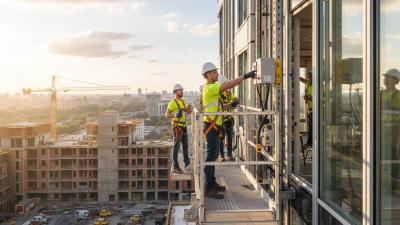
Why Choose Mast Climbers for Your Construction Projects?
In the ever-evolving world of construction, choosing the right equipment can define project success. One expert in Mast Climber Construction, John Smith, emphasizes, "Mast climbers enhance efficiency and safety at great heights." His insight highlights the importance of utilizing advanced tools in modern projects.
Mast climbers offer a unique advantage. They provide stable platforms that adjust to various heights. This adaptability simplifies the workflow, reducing the chances of accidents. However, relying solely on this technology can have drawbacks. Construction teams must ensure operators are well-trained, as improper use can lead to mishaps.
Moreover, not all projects may benefit equally from this solution. Some smaller sites might find traditional scaffolding more practical. A careful assessment of specific needs is essential before making a choice. Ultimately, understanding the strengths and limits of Mast Climber Construction can lead to better decision-making.

Advantages of Mast Climbers Over Traditional Scaffolding
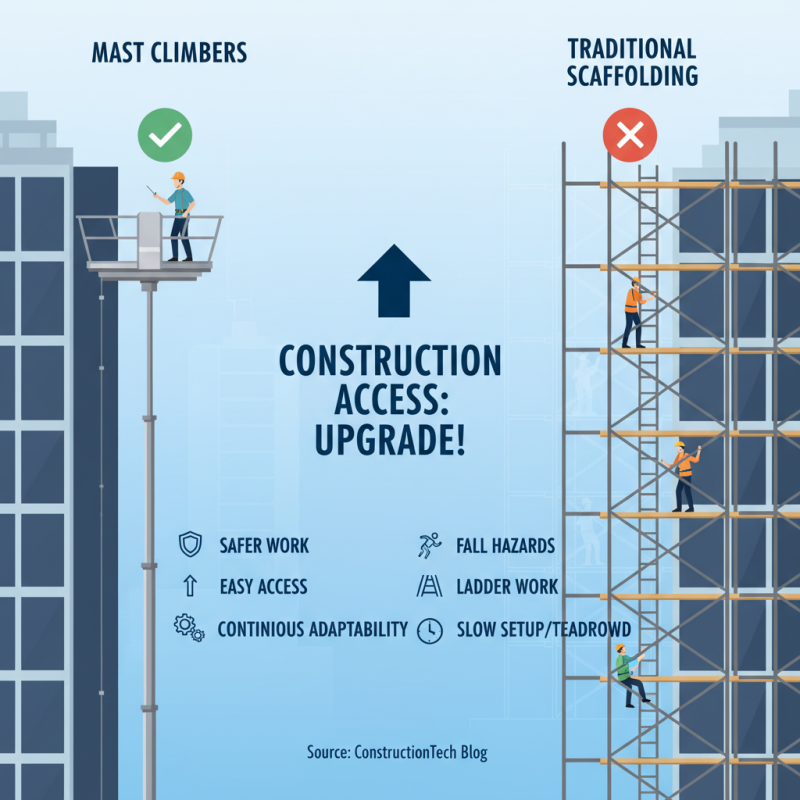
Mast climbers offer numerous advantages over traditional scaffolding in construction projects. They provide a stable and safe working platform high above the ground. This eliminates the common hazards associated with ladder work. Workers can access their tasks more easily without the risk of falling. Besides, mast climbers can move vertically along the building. This allows for better continuous access without needing constant assembly or disassembly.
One significant benefit is the efficiency they bring to a project. Teams can transport materials directly to the job site at various heights. This reduces time wasted in moving items up and down. However, it's essential to ensure proper training for operators to maximize safety. Training can sometimes be overlooked. Poorly trained operators may lead to accidents, negating the benefits of speed and accessibility.
Furthermore, mast climbers adapt well to various building designs. They can be used on both new builds and renovations. Yet, proper planning is needed to align the equipment with architectural features. If not, this can cause delays. Contractors should prepare for potential issues that can arise during setup. Overall, while mast climbers present clear advantages, careful management is crucial for optimal results.
Versatility of Mast Climbers in Various Construction Environments
Mast climbers have gained popularity for their flexibility in construction environments. These systems can adapt to various project requirements, from residential buildings to towering commercial structures. According to a report by the Occupational Safety and Health Administration (OSHA), mast climbers can enhance worker safety by providing stable and elevated work platforms. This adaptability is crucial in complex urban areas where space is limited.
The versatility of mast climbers allows for efficient movement in tight spots. They can be used on uneven terrains or alongside existing structures, which is often a challenge for traditional scaffolding. A study by the International Journal of Occupational Safety and Ergonomics highlights that these systems can increase productivity by 20% on average. However, it is essential to consider the learning curve for operators. Ensuring that all operators are adequately trained is vital to maximize the effectiveness of this equipment.
Mast climbers also facilitate better material handling. Their design allows for easy loading and unloading of supplies, reducing downtime. Yet, there are criticisms about their setup time compared to traditional scaffolding. This drawback can lead to delays in project timelines if not managed efficiently. Each project presents unique challenges, and mast climbers are not a one-size-fits-all solution. Contractors must weigh the benefits against potential inefficiencies.
Safety Features and Regulations for Mast Climbers
Mast climbers offer unmatched safety features that are crucial for modern construction projects. They provide stable platforms for workers at various heights. According to the Occupational Safety and Health Administration (OSHA), falls from heights account for 33% of construction fatalities. Mast climbers reduce this risk significantly.
One essential safety feature is the fall protection system. This system includes guardrails and harness attachment points. These features help prevent accidents during work at elevated levels. Additionally, mast climbers are designed to meet strict safety regulations. The American National Standards Institute (ANSI) ensures that equipment meets quality standards.
Tip: Always inspect mast climbers before use. Ensure they are in good condition and properly set up. This step can prevent many potential hazards.
Another aspect to consider is the weight capacity of mast climbers. While they allow for heavy materials, overloading can lead to instability. According to industry reports, overloading is a common mistake that leads to accidents. Workers need to be trained on load limits to prevent mishaps.
Tip: Provide regular training sessions for your team. Keeping everyone informed about safety and operational protocols is vital. Regular training can prevent costly mistakes and ensure a safer working environment.
Cost-Effectiveness of Using Mast Climbers in Construction Projects
Mast climbers are becoming a popular choice in construction due to their cost-effectiveness. A recent report from the Construction Industry Institute notes that these machines can reduce labor costs by up to 30%. This is significant. Labor is usually the largest expense in most projects. By utilizing mast climbers, firms can optimize worker efficiency, which leads to savings.
Moreover, mast climbers can improve project timelines. According to a study by the International Construction Management Association, projects using mast climbers can complete up to 20% faster than those relying only on traditional scaffolding. Faster construction means lower costs and quicker returns on investment. However, it’s essential to note that initial investments in mast climbers can be high.
There are also some trade-offs. Maintenance and logistics can be a challenge. Keeping the equipment in top shape requires planning. In some cases, weather conditions can affect their efficiency. Understanding these aspects is crucial for decision-making. Overall, while mast climbers present clear advantages, contractors should weigh these factors carefully.
Efficiency and Speed of Installing Mast Climbers on Job Sites
Mast climbers have become a popular choice for construction sites. Their design allows for rapid installation, which is crucial for meeting tight deadlines. Crews can set them up quickly, saving valuable time. With reduced setup times, workers can start using them right away, creating efficiency.
On many job sites, traditional scaffolding is cumbersome. Setting it up takes longer and involves more components. In contrast, mast climbers simplify the process. They require fewer adjustments and can be repositioned easily. This not only speeds up the workflow but also enhances safety. Workers feel more secure when using stable platforms.
However, it is worth noting that not every project will benefit equally. Some sites may have constraints that complicate installation. For example, space limitations or uneven terrain can make deployment tricky. Teams need to ensure that mast climbers are suitable for their specific conditions. Careful planning and assessment are essential to maximize their potential benefits.