2026 Best Mobile Aerial Platform Models for Your Business Needs?
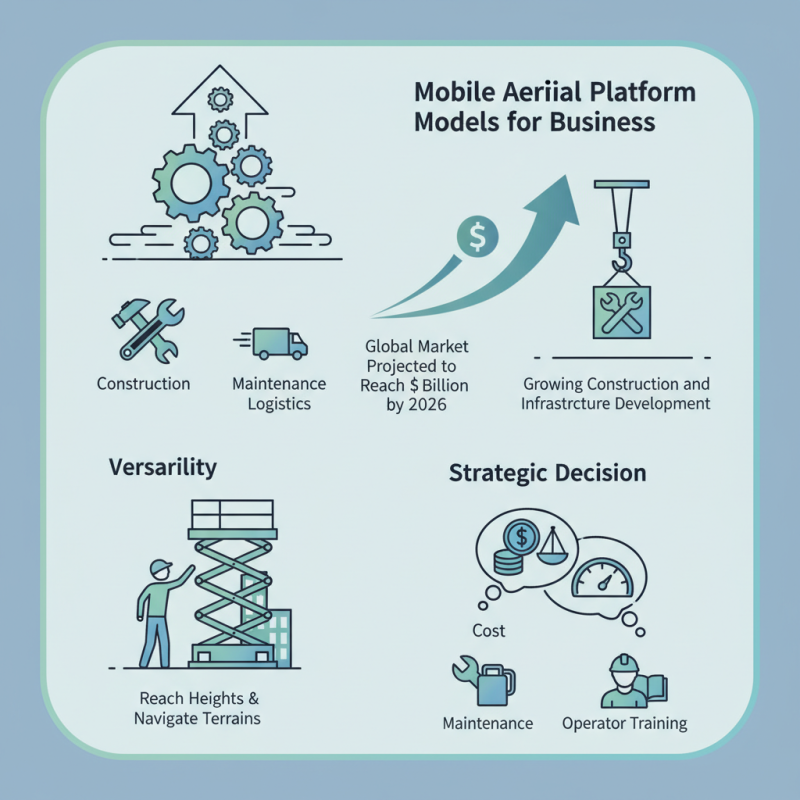
In the dynamic landscape of modern business, the demand for efficient Mobile Aerial Platforms is on the rise. According to recent industry reports, the global market for aerial work platforms is projected to reach USD 12 billion by 2026, driven by growing construction activities and infrastructure development. Companies are increasingly recognizing the value of these platforms in enhancing productivity and safety.
Mobile Aerial Platforms offer versatility. They can reach heights and navigate terrains that traditional equipment cannot. This makes them essential for various sectors, including construction, maintenance, and logistics. However, selecting the right model can be challenging. The variety of options and evolving technologies may lead to confusion and uncertainty.
Investing in a Mobile Aerial Platform is not merely a choice; it’s a strategic decision. Every business must evaluate its unique needs and budget constraints. In the quest for efficiency, some might overlook crucial factors such as maintenance and operator training. Balancing cost with performance is key to making a meaningful investment in these platforms. Each choice reflects not only immediate needs but long-term operational goals.
Top Features to Look for in Mobile Aerial Platforms
When choosing a mobile aerial platform, key features can influence your decision. Look for platforms with adjustable heights. This allows versatile use across various tasks. A stable base is crucial for safety during operations. Consider the terrain you'll be working on, as that affects stability.
Battery life matters too. Platforms with long-lasting batteries reduce downtime. They can operate longer between charges. Think about the weight capacity as well. A higher capacity means you can handle heavier loads, which increases productivity.
Tips for selecting the right platform: check the ease of transport. Platforms should be lightweight and easy to maneuver. Also, examine the controls. Intuitive controls enhance efficiency. Don’t overlook the importance of maintenance. Frequent checks can prevent breakdowns. Reflect on what suits your business’s day-to-day needs.
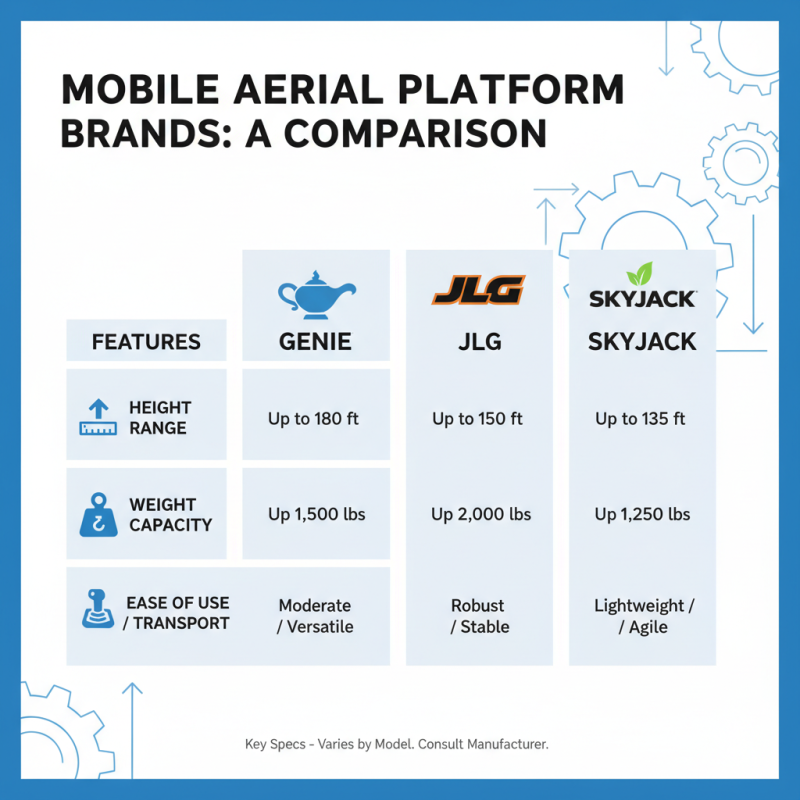
Comparison of Leading Mobile Aerial Platform Brands
When selecting a mobile aerial platform, the choice can be overwhelming. Different brands offer unique features that cater to various business needs. Factors like height range, weight capacity, and operational ease are critical. A lightweight platform is easy to transport. However, it might struggle with heavy lifting tasks. Conversely, more robust models could be cumbersome.
One popular aspect is control systems. Some platforms come with intuitive controls, while others require extensive training. This can affect your workforce's efficiency. Consider the environment too. Platforms that excel outdoors may not perform well in tight spaces. If your projects vary in setting, versatility is key.
Additionally, maintenance is often overlooked. Regular upkeep is required to ensure safety and functionality. Some brands may have accessible service options, while others can leave you stranded. Review your local service availability. The quest for the perfect mobile aerial platform involves more than merely selecting a model. It demands careful assessment of your specific needs and operational contexts.
Industry Applications for Mobile Aerial Platforms
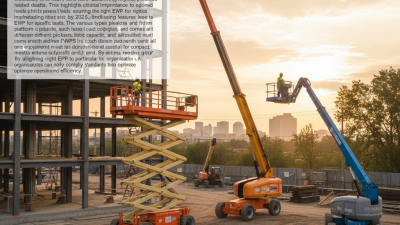
Mobile aerial platforms are transforming various industries. They provide efficient solutions for tasks that require height access. Construction sites are prime examples. These platforms allow workers to reach elevated areas quickly. Safety is a major concern, and these platforms often have built-in safety features. However, operators must receive proper training to minimize risks.
In agriculture, mobile aerial platforms play a crucial role. Farmers use them for crop monitoring and precision farming. The ability to survey large fields efficiently can save time and resources. Yet, challenges like terrain and weather can affect their performance. Users need to adapt and plan according to these factors.
In the realm of entertainment, aerial platforms enhance experiences. They provide unique views for filming and events. However, noise levels can sometimes be an issue. Event planners must consider this when scheduling shoots. Being mindful of location and timing can improve outcomes. These applications show that while mobile aerial platforms have immense potential, careful consideration is always needed for successful operation.
Cost Analysis and Budgeting for Mobile Aerial Platforms
When considering the cost of mobile aerial platforms, factors like initial purchase, maintenance, and operational costs come into play. According to recent industry reports, the average cost of a mid-range mobile aerial platform can range from $50,000 to $150,000. Budgeting for these expenses requires careful planning. Your company might find that additional training or certification for operators also adds to costs. These aspects cannot be overlooked when analyzing your budget.
Tips: Always account for hidden costs. Insurance, storage, and transportation can escalate expenses.
Regular maintenance is another vital aspect of budgeting. Neglecting this can lead to more significant future costs. An analysis by industry experts indicates that maintenance accounts for nearly 10-15% of total ownership costs annually. Evaluate service contracts versus in-house repairs. This balance can affect your bottom line significantly.
Tips: Consider long-term leasing options. This can lower upfront costs while providing flexibility.
In conclusion, ensure you factor in all potential costs. Do not underestimate the impact of evolving regulations on operational expenses. Regular audits of your budget can reveal unnecessary expenditures and highlight areas for improvement.
2026 Best Mobile Aerial Platform Models for Your Business Needs
This chart displays the cost of various mobile aerial platform models, helping businesses identify the investment required for each model. Understanding the cost is crucial for effective budgeting and decision-making.
Maintenance Tips for Optimizing Aerial Platform Performance
Maintaining your aerial platform is crucial for optimal performance. Regular inspections should be part of your routine. Check for any signs of wear or damage. Look at the hydraulic systems, electrical components, and tires. These parts are essential for safety and efficiency. Cleaning is also vital. Dirt and debris can affect functionality. A clean machine lasts longer and works better.
Adjustments may be necessary as well. Hydraulic fluids must be checked and replaced based on usage. Over time, seals can wear out. Replacing them at the right time can prevent larger issues. Ensure that safety features are functioning properly. Regular maintenance can reduce overall costs.
Consider training your team on basic maintenance. They should understand the impact of neglecting these tasks. Investing in regular checks can pay off significantly. Create a checklist for inspections; this can help avoid overlooking important details. Reflecting on past maintenance can guide improvements. Missing a small detail once can lead to big problems later.
2026 Best Mobile Aerial Platform Models for Your Business Needs - Maintenance Tips for Optimizing Aerial Platform Performance
| Model |
Max Working Height (ft) |
Platform Capacity (lbs) |
Weight (lbs) |
Power Source |
Maintenance Tips |
| Model A |
50 |
1000 |
4000 |
Electric |
Check hydraulic fluid levels regularly. |
| Model B |
60 |
1200 |
5000 |
Diesel |
Inspect electrical connections and wear parts. |
| Model C |
70 |
1500 |
6000 |
Hybrid |
Maintain clean filters to ensure optimal performance. |
| Model D |
80 |
1800 |
7000 |
Electric |
Schedule regular service checks to prevent downtime. |